
The “Touch Her and Die” Trope: Why Readers Love Protective Heroes

The “Touch Her and Die” Trope: Why We’re Obsessed With Protective Book Boyfriends
You know the moment.
Our heroine is threatened, kidnapped, injured, cornered—or someone simply makes the very poor decision to put their hands on her.
And he finds out.
Maybe he's a vampire.
A soldier.
A rebel leader.
A morally gray prince who has spent the last 300 pages insisting he absolutely does not care about this woman.
Doesn't matter.
Someone hurt her.
And suddenly, this terrifyingly powerful man has exactly one rule:
Touch her and die.
There's a reason this romance trope has readers kicking their feet, highlighting passages, and immediately adding another fictional man to the ever-growing list of Book Boyfriends Who Have Ruined Us for Reality.
But I don't think our obsession with the “touch her and die” trope is really about wanting a man who'll murder someone for looking at us sideways.
There's something much more interesting happening underneath all that fictional violence.
Because at its heart, “touch her and die” is often about one incredibly powerful romantic fantasy:
Being so deeply valued that when the world becomes dangerous, someone chooses to stand between you and it.
And apparently, we cannot get enough of it.

What Is the "Touch Her and Die" Trope?
The touch her and die trope features a fiercely protective love interest who becomes dangerous—or more dangerous—the moment someone threatens the person he loves.
Sometimes he's literally her protector.
A guard.
Soldier.
Warrior.
Bodyguard.
Sometimes he's the last person who was ever supposed to care about her.
An enemy.
A rival.
A villain.
A morally gray man who would happily watch the rest of the world burn but suddenly develops some very strong opinions about anyone laying a finger on her.
The intensity varies.
Sometimes it's simply: "Stay behind me."
Other times it's: "Who did this to you?"
And occasionally we've reached: "I have destroyed an entire government and several city blocks. Are you hungry?"
The details change.
The fantasy remains remarkably consistent.
He may be dangerous to everyone else. But when she's in danger, he's the person you want standing beside her.
Why Is the “Touch Her and Die” Trope So Popular?
On the surface, the answer seems obvious.
Dangerous man + protective instincts + romantic tension = excellent reading material.
But I think there are a few reasons this trope hits particularly hard.
1. It's the Ultimate “He Chooses Her” Fantasy
One of the most powerful parts of this trope isn't protection.
It's priority.
This character may have responsibilities that extend far beyond the heroine.
A kingdom.
An army.
A rebellion.
A family.
A supernatural court.
An oath.
An entire political movement.
And then there's her.
Suddenly, someone who has spent his entire life putting duty first encounters one person capable of rearranging his priorities.
That doesn't necessarily mean he abandons everything he believes in.
But when she's threatened?
We discover exactly how important she's become.
There is something intensely romantic about watching a character who doesn't give his loyalty easily decide:
Her. I choose her.
2. He's Dangerous—but She's Safe With Him
This might be my favorite variation.
Everyone else knows better than to get too close to him.
He's powerful. Feared. Maybe ruthless. Definitely morally questionable.
And then she walks into the room.
Suddenly the hands capable of destroying someone are gentle with her.
The voice everyone else obeys softens, and the man other people fear becomes the person she trusts to keep her safe.
It's not simply the fantasy of having a powerful protector.
It's the contrast.
The monster everyone else fears is the person with whom she is safest.
Tell me that doesn't scratch a very specific romance-reader itch.
3. His Protectiveness Says What He Won't
This one is especially delicious in a slow burn. Because sometimes our hero has spent the entire book insisting he doesn't care.
They're allies because circumstances require it.
He's protecting her because it's his job.
He came back for her because leaving her would've complicated the mission.
Obviously. (Sure, dude. Keep telling yourself that.)
Then someone hurts her. And suddenly all that carefully maintained emotional distance disappears.
He loses control.
The mask slips.
And everyone—including the heroine—gets to see exactly how much she matters to him.
That's why a good “Who did this to you?” scene can accomplish what fifty pages of internal monologue couldn't.
His reaction becomes a declaration.
4. Competence Is Hot
There. I said it.
The touch-her-and-die hero usually isn't merely protective.
He's capable of protecting her.
Maybe he's a skilled fighter.
Perhaps he understands the political landscape.
Maybe he's frighteningly powerful or has supernatural abilities that could level a building.
Whatever the skill, when things go sideways, this is someone you want nearby.
There's something incredibly satisfying about watching a highly competent character turn all that ability toward keeping someone he loves alive.
Especially when the heroine is capable in entirely different ways.
Which brings me to something important.
A Protective Hero Doesn't Require a Helpless Heroine
We just talked about this in my discussion of the damsel in distress trope, but it bears repeating:
Being protected doesn't automatically make a woman weak.
A heroine can wield a sword and still need someone to watch her back.
She can be brilliant and still find herself physically outmatched.
She can rescue him in one chapter and need him to rescue her in another.
She can be terrified.
She can get hurt.
She can make mistakes.
She can need help.
None of those things automatically strip her of agency.
In fact, some of my favorite touch-her-and-die pairings involve women who could absolutely cause substantial damage on their own.
The romantic fantasy isn't necessarily:
“I'm helpless. Save me.”
Sometimes it's:
“I know you can handle yourself. But you don't have to handle everything alone.”
That's an entirely different kind of intimacy.
Protective vs. Possessive: When Does “Touch Her and Die” Go Too Far?
Here's where things get interesting.
Because protective and controlling aren't the same thing.
Consider the difference between:
“You're not going because I said so.”
and:
“You're going anyway, aren't you? Fine. I'm coming with you because someone tried to kill you yesterday.”
Both men might be overprotective, but only one is attempting to take away her ability to make her own decisions.
And that's an important distinction.
The best protective heroes don't make the heroine smaller so they can feel bigger. They may argue with her, and they may think her plan is absolutely insane. In fact, they'll probably follow her into danger muttering about how she's going to be the death of them.
But ultimately, she remains a person with agency.
And that's one reason these dynamics can work so beautifully in fiction.
Romance novels give us room to explore exaggerated emotions, dangerous worlds, morally gray characters, possessiveness, obsession, and devotion at a heightened level.
That doesn't mean every behavior we'd swoon over on the page belongs in a healthy real-world relationship.
Context matters.
But fiction gives us a safe place to explore the fantasy.
And sometimes that fantasy is simply having someone look at a world full of threats and say:
Not her.
Why “Touch Her and Die” Works So Well in Fantasy, Paranormal, and Dystopian Romance
Put this trope in a contemporary coffee shop and things can get weird pretty quickly.
Put it in the middle of a supernatural war?
Now we're talking.
Speculative romance gives this trope somewhere to go.
The heroine isn't being protected from Chad at the office Christmas party.
She's being hunted by vampires.
Captured by an authoritarian government.
Targeted by supernatural creatures.
Caught in a rebellion.
Thrown into a deadly magical conflict.
Living under a regime where loving the wrong person could literally get her killed.
Suddenly extreme devotion exists inside an equally extreme world.
And that means the hero can do all the wonderfully unhinged fictional things we came here for.
Defy the king.
Betray his family.
Fight an army.
Cross enemy territory.
Break into a prison.
Start a war.
Burn down the institution that hurt her.
High-stakes worlds give us high-stakes love.
And that is exactly where this trope thrives.
8 “Touch Her and Die” Romance Books to Add to Your TBR
If you've made it this far thinking, "Okay, Josephine, enough analysis. Give me the dangerously protective fictional men," I've got you.
These stories span paranormal, fantasy, sci-fi, and dystopian romance, but they all play with some version of fierce protection, dangerous devotion, or the moment when threatening the heroine becomes a very bad life choice.
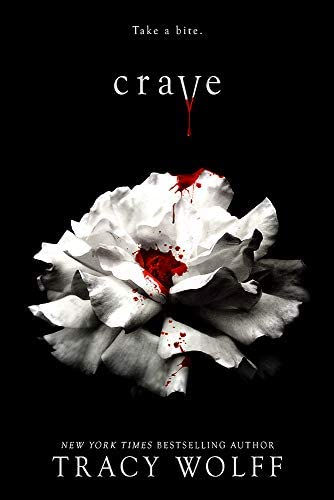
1. Crave Series by Tracy Wolff
Protective Hero: Hudson Vega
If your preferred flavor of book boyfriend is absurdly powerful vampire who becomes deeply devoted to one woman, Hudson deserves a place on your list.
The Crave series begins with Grace entering the supernatural world of Katmere Academy, but Hudson's importance—and his relationship with Grace—develops as the larger series unfolds.
What makes the dynamic work isn't simply that Hudson is powerful.
It's the contrast between what he's capable of and the vulnerability he eventually allows Grace to see.
Why it fits: Dangerous supernatural hero + fierce loyalty + everyone else should probably reconsider threatening her energy.

2. From Blood and Ash by Jennifer L. Armentrout
Protective Hero: Hawke
Poppy is not a helpless heroine.
That's precisely why this example works.
She's curious, stubborn, capable with a weapon, and increasingly unwilling to accept the life other people have chosen for her.
Hawke doesn't need Poppy to be weak in order to want to protect her.
Their relationship gives us that addictive combination of a heroine developing greater autonomy and a man whose protective instincts become increasingly difficult to ignore.
Why it fits: Capable heroine + deadly protector + forbidden attraction + secrets + extremely questionable boundaries around how much these two care about each other.

3. Gild / The Plated Prisoner Series by Raven Kennedy
Protective Hero: Slade
For readers who prefer their protective heroes considerably darker, The Plated Prisoner series explores protection alongside power, captivity, trauma, possession, and autonomy.
That distinction matters.
Auren's journey isn't simply about finding someone strong enough to protect her. It's also about recognizing unhealthy forms of control and gradually reclaiming ownership over herself.
That makes the protective dynamic particularly interesting because the story continually asks us to consider the difference between being protected and being possessed.
Why it fits: Dark fantasy romance + morally gray protection + trauma + autonomy + a hero whose dangerous reputation is very well earned.
(Reader note: This is an adult series with significantly darker themes and explicit content.)

4. When the Moon Hatched by Sarah A. Parker
Protective Hero: Kaan Vaegor
Raeve is an assassin working for a rebellion.
So let's establish something immediately:
This woman does not need a man to teach her how to be dangerous.
But when Raeve is captured by the Guild of Nobles, her path collides with Kaan Vaegor—a dragon rider and king carrying grief, power, and secrets of his own.
And Kaan's instinct to protect Raeve becomes especially interesting because Raeve is already formidable.
That's one of my favorite versions of the touch-her-and-die trope. The heroine doesn't have to become weaker so the hero can protect her.
She can be an assassin.
She can fight.
She can make her own decisions.
She can be dangerous in her own right.
And he can still look at anyone threatening her and think:
Absolutely not.
Because sometimes protection isn't about believing someone can't save herself.
It's about loving her enough that you don't intend to stand around and make her do it alone.
Why it fits: Assassin heroine + powerful king + dragon rider + rebellion + fierce protection + high-stakes romantasy + she can kill you herself, but he'd still really prefer you didn't touch her energy.

5. Inception by Bianca Scardoni
Protective Hero: Dominic Huntington
Let's give the indie books some love.
Inception throws Jemma Blackburn into a world of vampires, dangerous secrets, supernatural threats, and a complicated romantic web after her father's murder.
And Dominic brings plenty of the intense, brooding paranormal-romance energy that made so many of us fall in love with vampire books in the first place.
Why it fits: Vampires + danger + brooding protector + supernatural secrets + old-school paranormal-romance energy.

6. The Darkest Star by Jennifer L. Armentrout
Protective Hero: Luc
If your preferred fictional man could potentially obliterate almost anyone threatening you, Luc has entered the chat.
The Darkest Star brings science fiction, aliens, danger, secrets, and romance together, giving us a heroine drawn into circumstances far beyond anything she initially understands.
And Luc?
Powerful is putting it mildly.
That imbalance in knowledge and supernatural capability gives his protective instincts plenty of room to shine while Evie continues uncovering truths for herself.
Why it fits: YA sci-fi romance + ridiculously powerful hero + secrets + danger + you really should not have threatened his girl energy.

7. Daggermouth by H.M. Wolfe
Protective Hero: Greyson Serel
This one puts a particularly fun spin on the trope because Shadera is a mercenary sent to assassinate Greyson.
She misses.
Naturally, they end up forced into a political marriage.
As one does.
Set inside a brutal surveillance state, Daggermouth pairs the president's son with a woman literally trained to kill him. The official description positions their relationship as a choice between destroying each other and potentially burning the city down together.
In other words, Shadera absolutely does not need to become physically helpless for Greyson's protectiveness to mean something.
Why it fits: Assassin heroine + protective hero + forced marriage + true enemies-to-lovers + rebellion + dystopian politics.
And if that combination happens to sound particularly appealing to you...
I have one more.

8. The Dissenter Saga by Josephine Lamont
Protective Hero: Wes Calvernon
Wes Calvernon has every reason to hate Mara de la Puente.
He's a rebel leader. She's the dictator's daughter.
Her family represents the government responsible for everything his people are fighting against.
Protecting her should be the last thing he wants to do.
And yet...
Over the course of The Dissenter Saga, the girl Wes should've despised becomes someone he is increasingly willing to risk everything to protect.
By Rise, Mara has been taken and accused of treason while war spreads across the United Factions—and Wes is willing to confront betrayal inside his own family and risk what's left of the rebellion to bring her home.
That's what makes his particular brand of touch-her-and-die so satisfying to me.
It isn't instant.
It's earned.
The loyalty develops.
The relationship changes.
And eventually, the dictator's daughter becomes one of the people this rebel leader would go to war for.
Why it fits: Rebel leader + dictator's daughter + slow burn + forbidden love + war + political intrigue + protective antihero energy.
Maybe “Touch Her and Die” Isn't Really About Possession
That's what I keep coming back to.
At its weakest, this trope can become:
She's mine.
But at its best?
I think it's something closer to:
She matters.
Her safety matters.
Her life matters.
Her pain matters.
What happens to her matters enough to affect someone who has spent his life learning not to be affected by much of anything.
And maybe that's why the trope hits so hard.
We're not necessarily swooning because a fictional man is willing to commit several felonies on our behalf.
Although romance readers are a diverse population. No judgment.
We're swooning over the fantasy of fierce devotion.
Being chosen.
Being known.
Having someone capable of standing beside us when things become terrifying.
And knowing that if the entire world turns against us, at least one person is already reaching for his sword.
That's the fantasy.
Not: “I can't save myself.”
But: “I don't always have to.”
And those are two very different things.
Want a Rebel Leader With Serious “Touch Her and Die” Energy?
Mara de la Puente was raised to believe the Dissenters were monsters.
Wes Calvernon has every reason to believe the dictator's daughter is his enemy.
Neither of them expects what happens next.
If you love slow-burn YA dystopian romance, dangerous loyalties, protective heroes, political rebellion, impossible choices, and love worth surviving a war for, meet Mara, Wes, Matias, and the Dissenters.
Start with Dissent and follow the complete trilogy through Resist and Rise.
Book One of the completed Dissenter Saga trilogy.

Want to Meet the Dissenters for Free?
Start before Dissent with Revile, the free standalone prequel.
Rebel assassin Liddy Le has one mission:
Kill Javier de la Puente—the dictator's nephew.
Then she's captured.
And the man she came to kill may be the only person who can help her escape.


Comments